

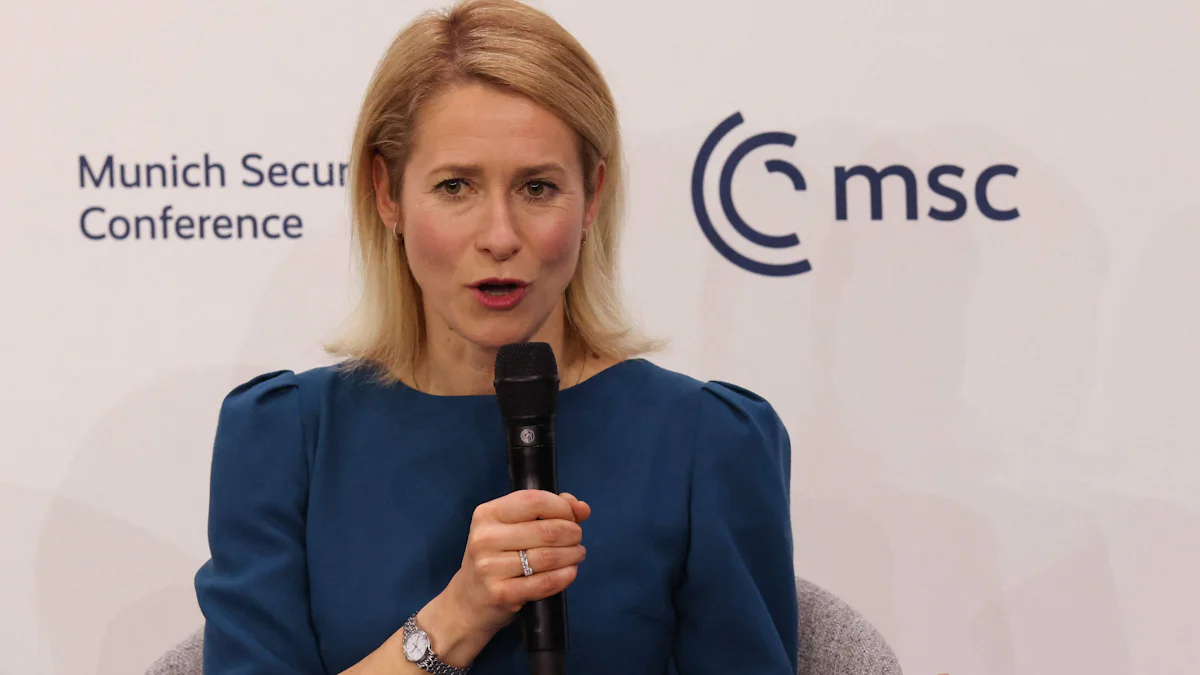
At the Munich Security Conference, EU High Representative Kaja Kallas delivered a strong rebuttal to the pessimistic rhetoric surrounding Europe, particularly challenging the views expressed by US Senator Marco Rubio. On the third day of the influential security forum, Kallas firmly asserted that Europe is not on the brink of „Untergang“ (downfall). Her intervention aimed to counter narratives of decline and instill a sense of resilience and agency within the continent. This direct contradiction underscored a crucial divergence in perspectives on Europe’s future role and stability amidst complex global challenges. Kallas’s statement set a notably optimistic tone, emphasizing Europe’s inherent strengths and its capacity to navigate current crises without succumbing to fatalism.
The spirited exchange between Kallas and Rubio highlights a broader debate prevalent within international circles regarding Europe’s geopolitical standing, economic health, and internal cohesion. While some voices, like Rubio’s, tend to portray a continent grappling with existential threats and an eroding influence, Kallas’s position underscores the EU’s ongoing efforts to reinforce its autonomy and strategic capabilities. Beyond the immediate refutation, today’s discussions at the MSC are also deeply focused on the critical theme of Europe’s competitiveness. This encompasses a multifaceted examination of its economic dynamism, technological innovation, and its ability to maintain a leading edge in a rapidly evolving global landscape.
Europe’s competitiveness is not merely an economic metric but a foundational element of its overall security and sovereignty. Discussions delve into how the continent can foster an environment conducive to growth, attract investment, and develop cutting-edge industries that can rival global competitors. This includes addressing regulatory hurdles, investing in research and development, and ensuring a skilled workforce. The ability of Europe to assert itself economically is directly linked to its capacity to project power, influence international norms, and fund its own defense and security initiatives. Thus, the pursuit of enhanced competitiveness is seen as a strategic imperative to bolster Kallas’s assertion that Europe is far from collapse.
The Munich Security Conference serves as a vital platform for these high-stakes dialogues, bringing together world leaders, policymakers, and experts to address the most pressing global security issues. For our liveblog coverage of these crucial discussions, we draw upon a diverse and reputable array of news sources. In addition to our own meticulous research and on-the-ground reporting, we integrate material from leading international news agencies such as dpa, Reuters, epd, KNA, and Bloomberg. This multi-source approach ensures a comprehensive, balanced, and timely dissemination of information, providing our readers with a rich and accurate understanding of the complex debates unfolding at the MSC.

